Bike almost fits? The five swaps that fix it, cheapest first
A careful look at brake lever reach, saddles, stems, handlebars and crank length, which swaps rescue a marginal fit, and how to tell when the frame is simply wrong.
One rider got tired of being handed a size down instead of a shape that fit, measured a lot of frames, rode a few, and wrote down what actually made the difference. Everything here is checkable in a shop with a tape measure.
Free before paid
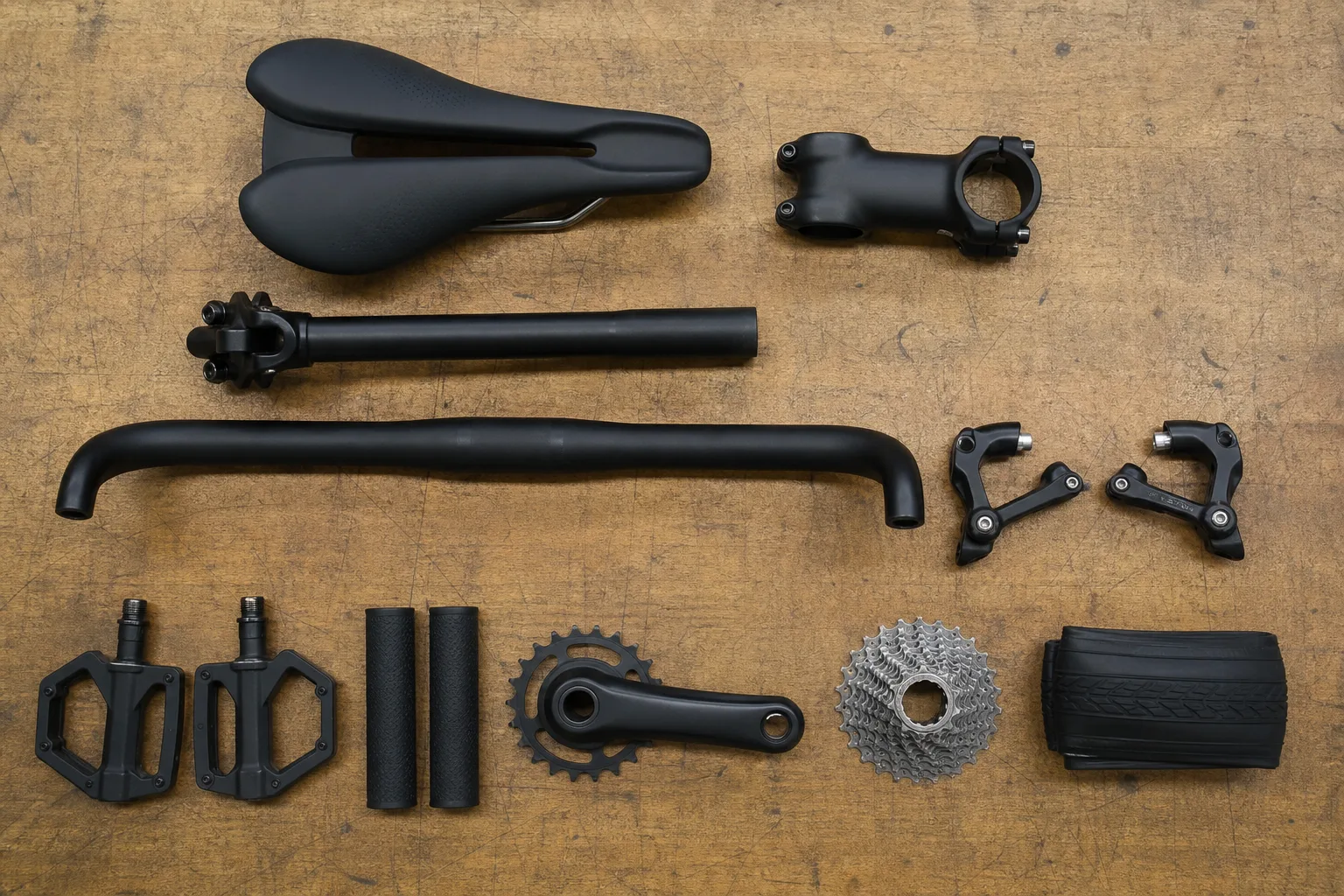
Saddle width is determined by the spacing of your sit bones, which has no reliable relationship to your height. Many small riders need a wider saddle than they were sold.
A bike that almost fits is a different problem from a bike that does not. The first is a parts problem, solvable in an afternoon with hex keys and a modest budget, and the second is a frame problem, solvable only by selling the bike. Most riders under about five foot four end up somewhere in between, on a machine whose seat tube is right and whose front end was drawn for someone else. The order in which you attack that matters, because the cheap changes often reveal that the expensive ones were unnecessary.
1. Brake lever reach, which costs nothing on most bikes
Start here because it is free and because it is the fit error that has actual safety consequences. Nearly every modern brake lever, flat bar or drop, carries a reach adjustment: a small grub screw behind the blade, or a hex bolt inside the hood, that pulls the resting position of the lever closer to the bar. The Consumer Product Safety Commission is responsible for the federal requirements bicycles must meet before sale, including braking, but nothing in a compliance standard guarantees a lever falls under a short finger. Check that the first joint of your index finger sits on the blade with your hand relaxed. If it does not, turn the screw.
2. The saddle, where width beats every other variable
Saddle width is set by the distance between your sit bones, not by your height, and small riders are not reliably narrow. A shop with a measuring pad can find the number in two minutes; a piece of corrugated cardboard on a hard chair gets you close for free. What a careful reader checks is whether the sit bones are landing on the flat rear section of the saddle or dangling off the back of a nose-heavy road shape. Saddles are mid-priced and endlessly resellable, so buying the wrong one is a recoverable mistake rather than a costly one.
3. The stem, the highest return per dollar on the whole bike
Stems are among the cheapest components on a bicycle and among the most consequential for a rider whose reach is the limiting dimension. Going from a 90mm stem to a 60mm one changes how far you stretch, how much weight sits on your hands, and how quickly the steering responds, all for the price of a decent tire. Watch the tradeoff honestly: very short stems make the front end feel nervous, and below roughly 50mm on a road bike you are usually compensating for a top tube that was never going to work. The stem tells you where the frame's limits are.
4. Handlebar width and reach, cheap on flat bars and less so on drops
A flat bar can be shortened with a pipe cutter for nothing but the cost of re-taping or sliding the grips back on, and narrowing a bar to roughly shoulder width transforms control for a small rider. Drop bars are a purchase, not a trim, but the numbers on the box are worth reading: reach is how far forward the hooks extend from the clamp, drop is how far down, and a compact bar with a short reach and a shallow drop buys back a couple of centimeters of stretch without touching the stem. Combined with lever position, that is often the whole fix.
5. Crank length, the expensive one, and the frame verdict
Cranks are the priciest swap in this list once you count the arms, possibly a new bottom bracket, and the labor to install both, and they are the one most riders should attempt last. Shorter cranks, in the 165mm range and below, reduce how far the knee comes up at the top of the stroke, which helps riders who feel folded shut or who cannot keep their hips still on the saddle. If, after lever reach, saddle, stem, bar and cranks, you still cannot get weight off your hands or keep the front wheel from wandering, the frame's stack and reach are wrong for you and no component will make that right.
Do the free adjustments first, ride for a week, then spend. The sequence saves money, and it also gives you a record of which change did what, which is worth more than any single part on the bike.